Why we must help and support Christians in Nigeria
By Dave Cano
Inside my home office lies a plank owner certificate that I received from the Navy Environmental Preventive Medicine Unit 7 located in Rota, Spain. My wonderful Navy teammates and I re-established that command in 2014 after years of non-existence following its previous location in Sigonella, Sicily. I worked there from 2014-2017 and we were responsible for providing support to the Navy’s operational and combatant commands stationed in the European and African theaters of operation. Our Preventive Medicine support ranged from Environmental Health, Industrial Hygiene, and Entomology training and guidance. As the unit’s Force Protection Officer, and as an operator as well, one of my main operating areas was the African continent where I deployed to Egypt and Djibouti on two separate occasions, along with my other duties providing Force protection intelligence to my teammates deploying to various locations in EUCOM and AFRICOM. But it was my visits to the African theater that were very eye opening in understanding the importance of U.S. engagement in other countries in ways that were not directly tied to immediate national security threats. As a conservative thinker in most respects, I’d been more inclined towards a posture of general restraint in U.S. activities in other countries where the immediate threat to national security is not present, or worth the investment in American blood. I saw a lot of American bloodshed in Iraq and Afghanistan as a Hospital Corpsman. However, the visits to Africa made me realize the importance of maintaining our presence and visibility on a continent with so much potential, but that at the same time could be very fragile and precarious. At this point in time, the Christian population in Nigeria is in a very precarious and critical situation.
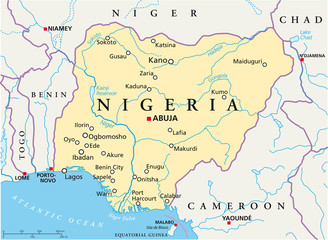
As the Global War on Terrorism along with our entire National Security Strategy shifted and pivoted with the passage of time after 9/11, the old NEPMU-7 was decommissioned in 2006 and re-established in 2014 to support Europe and Africa. The need for NEPMU-7 was notable in the wake of Russia’s aggression against Crimea, and the Boko-Haram threat that has intensified in Nigeria and which has escalated to its current devastating levels today. Terror and threats against Christian villages and communities in Nigeria and other parts of Africa by Jihadist militant groups is nothing new. According to Open Doors, a human watchdog organization, nearly 70 percent of Christians killed around the world last year were in Nigeria. On several occasions Jihadist groups have attacked and killed Christians of all ages, destroyed their property, and have engaged in acts of kidnapping for ransom money. The terror and violence towards Christians and churches have been continuing despite growing awareness of the situation and pleas from many groups including one Nigerian bishop who testified before the US Congress this year on the continual violence. Though violence in different African nations has been consistent in recent years as in the case of the Civil War in Sudan, the scale and relentlessness of atrocities in Nigeria have been incredibly targeted to all areas of their Christian community. American response to large scale violence in Africa in previous decades has varied such as military action in Somalia in 1993, along with the “inaction” during the Rwanda killings the following year in 1994.
Fortunately, in recent weeks awareness has spiked in the United States due to a bill sponsored by Senator Ted Cruz from Texas in September called the “Nigeria Religious Freedom Accountability Act of 2025”. This bill, alongside social media posts by President Donald Trump raising his concerns, and firing warnings at the Nigerian Government is sending clear signals for immediate change. On Nov 1, President Trump stated on social media, the United States will intensify action in the form of ceasing aid and assistance along with even military action against the terrorists. He stated, “if we attack, it will be fast, vicious, and sweet, just like the thugs who attack our cherished Christians”. Warning! The Nigerian government better move fast”. History has clearly shown that Mr. Trump does not bluff or screw around with this kind of stuff.
President Trump’s threat to use military power along with Senator Cruz’s bill which highlights sanctions against those in the Nigerian government and others who are enabling the persecution of Christians is certainly bound to raise more attention across the international human rights community in the days and weeks ahead. When deciding to use American military force in any capacity, it is important to know the need, circumstances, and U.S. national security interests upon making such a decision. The political calculus of any leader is certainly a factor in such a decision. But the distinction of President Trump’s leadership style has famously been his instinctive and visceral reactions to raw human conditions and suffering, and his decisive willingness to use American resources and power to mitigate that suffering. Such was the case in 2017 and 2018 when he launched tomahawk missile attacks from U.S. Destroyers, two of which were the USS Ross and the USS Porter, against Basher-Al-Asad’s regime for using chemical weapons against civilians in Syria. As was the case then, the suffering, pain and corruption in Nigeria has been sorely prolonged and brutal beyond imagination. Most people familiar with the ground situation in Nigeria have been praying for the global community to assist those brave souls and church leaders who are taking incredible risks to their lives and safety by speaking up about the dire situation.
In the book of Hebrews chapter 13, verse 3, the writer admonishes believers to remember their brothers and sisters in Christ who are suffering persecution. The need for our leaders to wisely consider the proper degree of U.S. economic sanctions, diplomatic engagement, and military force is always paramount. And the decision to send American servicemembers into harm’s way must be for a legitimate and noble cause based on honor and righteousness. But there are times when the suffering of so many innocent lives must be stopped, and that time is now. If terrorists in Nigeria who are killing Christians do not stop and make an about face from economic sanctions and have some serious, “chill out permanently”, conversations, the time for something different will be necessary. It will be time for those militants who are killing men, women, and children to face the swift and explosive corrective power and lethality of the U.S. Armed Forces. President Trump knows how defeat an enemy the right way. He doesn’t keep American troops in prolonged harm’s way to appease the military industrial complex and the financial interests of contractors who capitalize on extended wars. He sends our brave warfighters to accomplish their mission as efficiently and quickly as possible, and to get back home to their families as quickly as possible.