

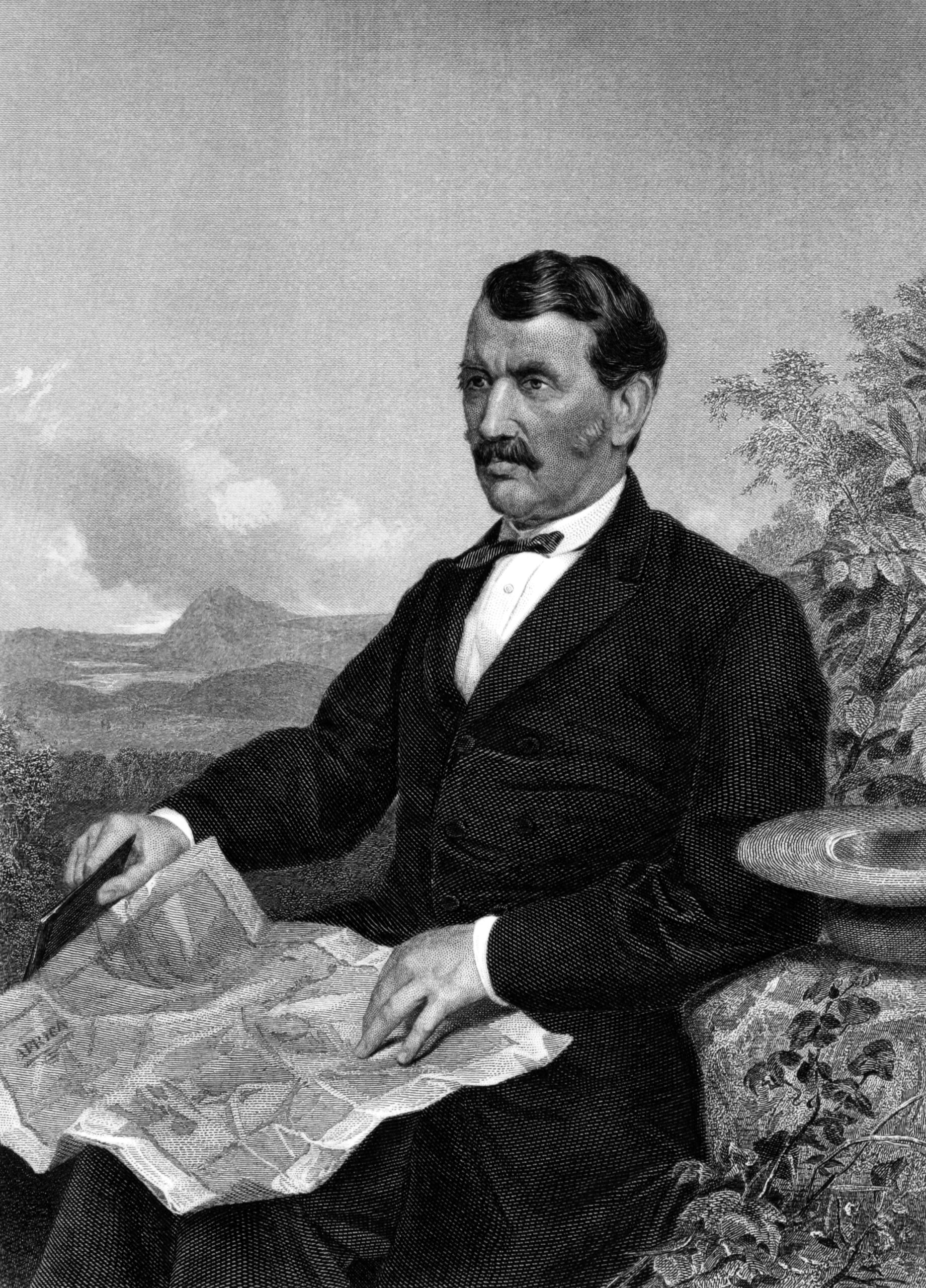
As a teenager attending an Assembly of God church in San Antonio, Texas for many years where my family and I had been members of, there was a particular preacher whom I remember referencing many of the great Christian figures and missionaries of past centuries. Since I was a young kid, I always had a keen interest in the missionaries of Christendom regardless of which nation served as their launchpad. During the 1500’s, Catholic Spanish missionaries established their presence in several Southwestern states in the U.S. one of which was our famous Alamo here in San Antonio. A few centuries later, Great Britain sent several missionaries around the world, later followed by the United States. My father-in-law, Gary Jones served as an American missionary to Central America for 14 years, particularly Nicaragua and Costa Rica. He was ordained by the Assemblies of God and later resumed pastoral duties back in Texas and eventually became a district Superintendent. He passed in 2016, but I have fond memories of our conversations over coffee and Mexican pan de dulce. Throughout the ages, missionaries have been protagonists of spreading the Christian gospel and carrying out the Great commission that Christ commanded and one of the greatest missionaries was David Livingston. Livingston hailed from Scotland and devoted his career as a missionary to the African continent. Though his primary mission was as an ambassador for Christ’s kingdom, his work also entailed various other pursuits and objectives such as that of a physician, explorer, writer, geographical surveyor, cartographer, and abolitionist against the horrible African slave trade. His life was an extraordinary example of self-actualization, courage, vision, and adventure.
David Livingstone was born in Blantyre, Scotland in 1813 and from a young age worked in the town’s cotton mill. His mother and father encouraged him to study and as he grew older his interests included theology and science. Early on, he began his affiliation with the London Missionary Society and other like-minded individuals as he was completing his medical studies. He then departed for Africa with the goal of spreading the gospel, but certainly with a mindset yearning for adventure and discovery. It was during this time that he embarked on various sea voyages and land campaigns through new and exotic terrains. These travels facilitated his contact with persons of a completely different culture and pushed his faith to the ultimate tests. In his journals and writings, along with biographical accounts from different sources, much attention is given to his practical Christianity and common sense when it came to dealing with the native tribes in Africa. Though he went several years without converting large numbers to Christianity, his impact consisted of breaking barriers and establishing rapport between the native Africans and for many of them, a white man who carried a peculiar aura about himself. Livingstone made an interesting note in his diary of the power and importance of simply giving respect and showing good manners and civility. These qualities were well received by several of the native African tribes, many of whom had varying degrees of temperament and potential hostilities. It must have been fascinating to many who have never been able to fully understand what simple common sense and good manners could do.
Many of Livingstone’s experiences and challenges only served to forge and strengthen his faith. On one famous occasion, he was attacked by a male Lion who survived his initial aimed shot and proceeded to target his left arm causing significant injury. The lion eventually succumbed to blood loss from additional attacks from others around him. As his time and experience in Africa increased, something very interesting seemed to occur in terms of God’s plan for his life. Though his objectives of many direct conversions to the Christian faith was not immediately realized, he planted the proper seeds and realized other gifts and opportunities given to him by God. His initial goal was to spread the gospel, but his talents as an explorer and surveyor led him to collect information and intelligence on finding the source of the Nile River. His quest for that knowledge along with other opportunities to identify the course of certain waterways and the overall sub-Saharan terrain would ultimately provide a great source of navigational input that would formulate maps and illuminate future European powers in order to improve trade and commerce within the African continent. Most impressive about Livingstone’s work and his mission is the fondness, support, assistance, and respect he gave and received from the African tribes. Equally distinct was his personal fortitude in executing his goals and priorities in terrain that could be brutal, especially from certain wildlife, rains, and disease carrying insects. Many historians’ credit Livingstone’s greatest humanitarian accomplishment to be his descriptions and expositions of the horror of the slave trade that was carried out by numerous regional actors from within and outside of Africa. Those accounts shocked the Victorian era British population and was a huge factor in bringing international awareness against the evil practice.
I had the opportunity to travel to Africa on three occasions during my Naval career. On all three occasions we were performing industrial hygiene surveys, once in Egypt, and the other two times in Djibouti which is near Somalia and Yemen. It was on one trip in January 2017 to Djibouti with our unit’s Industrial Hygiene Officer, that I was suddenly struck with symptoms that I had never experienced before and since then. It felt like a very bad flu. However, these symptoms felt violent and that something inside me was trying to break every bone in my body. I was given a room inside an extended portable unit living row that had a bed and a night light. On one of the first nights there, the symptoms came over me with sheer ferocity and I remember literally what felt like the most vicious spiritual street fight I have ever experienced. I was literally quoting every biblical scripture I knew in my head as I was shaking uncontrollably in bed with a thin blanket over me. But by the grace of God and his help, I eventually found some rest and had strength in the morning as I carried on my tasks. If you’ve had the kind of Active Duty career I had, sometimes you don’t pay attention to how well you’re feeling in certain situations; you just go get the job done with whatever you have in your tank. I was fortunate to have a good teammate in our Lieutenant. We completed our mission and flew back to my home in Rota, Spain re-uniting with my family. To this day, I don’t know exactly what the actual source of that acute malady and its violent manifestation were, whether it was viral, bacterial,…or something else. But what I do know is that night, I continued growing in my recognition that God’s power always overcomes in the most desperate and intense of situations when we put our trust completely in him. Livingstone experienced a level of dependence and trust in God that allowed him to serve as an incredible inspiration for generations to come.