

The content of one’s character
By David Cano
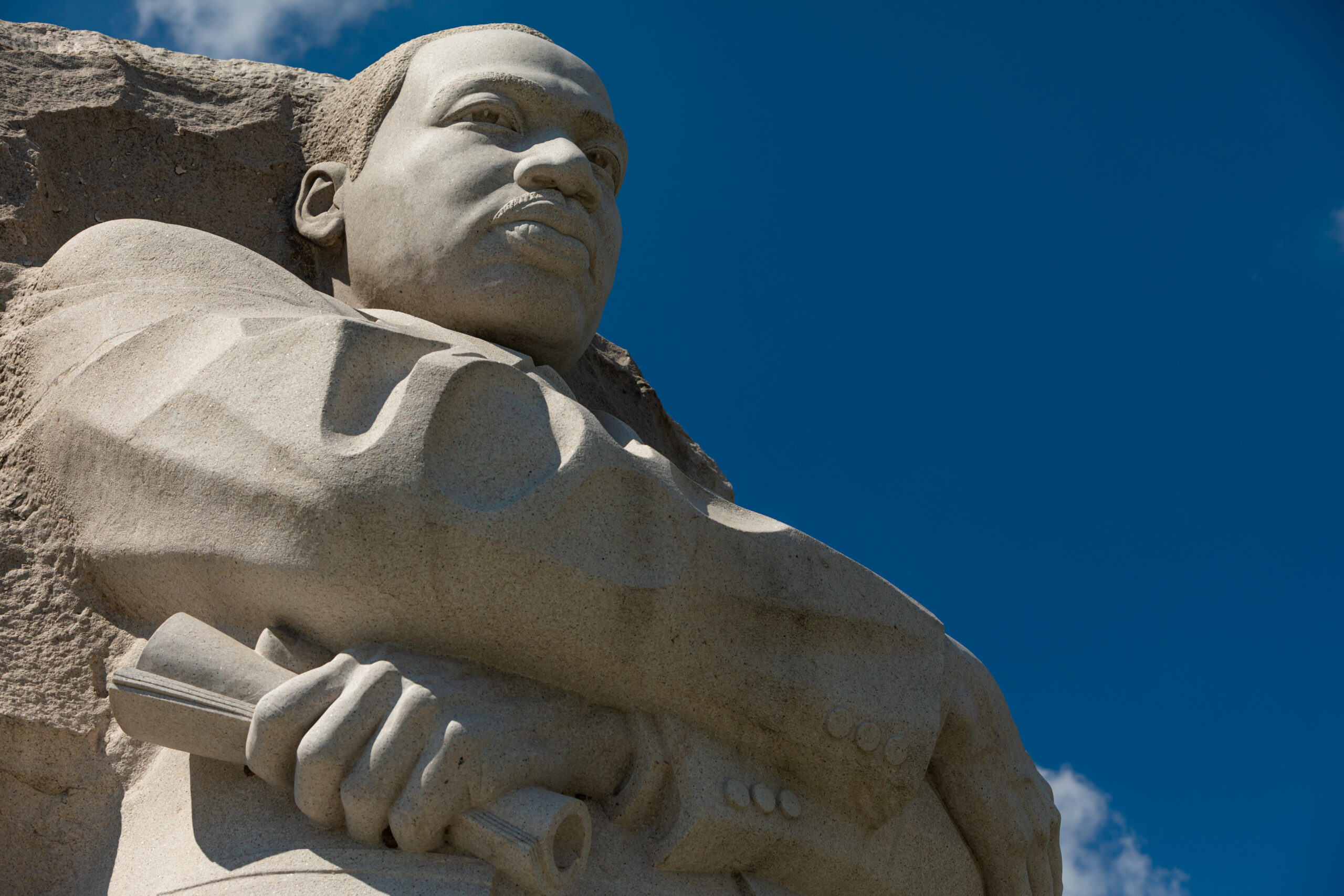
The phrase, “the pen is mightier than the sword”, was coined by the English author, Edward Bulwer-Lutton in 1839, from his play “Richelieu, or the conspiracy”. That particular phrase has become extremely famous as it highlights the point that ideas and words carry great power to influence people and societies. History is filled with masterful wordsmiths that have used the power of rhetoric to accomplish incredible things and one of the greatest communicators of the twentieth century is Dr. Martin Luther King, Jr. This January weekend, Americans and others around the world remember and celebrate the work, impact, and legacy of Dr. King’s life. His life on earth was tragically ended at the young age of only 39 when he was assassinated outside a hotel in Memphis, TN in April 1968. However, the zest and determination he showed in his lifetime towards the American cause of civil rights helped achieve tangible legislative reforms, as well as raising a national consciousness of the need to be a more just and civil society.
Perhaps the most famous of Dr. Kings many memorable speeches and letters that he formulated was his “I have a dream speech” that he delivered in Washington DC in August of 1963. On the grounds of the Lincoln Memorial in front of an estimated 250,000 people, King delivered a passionate vison of a more just American society that could be less divided by racial prejudice and discriminatory practices in far too many parts of the nation, but most notably in the American southern states. The speech is a masterpiece, but one line has always resounded to me on a great personal scale. It is when he states,” I have a dream that one day people would not be judged by the color of their skin, but by the content of their character”. 52 years have passed since those words were said by Dr. King. Though it’s been decades since America has been officially desegregated, equal voting rights have passed, and we have even elected an African American president; we still have more positive work to do in the years to come. I will come back to character content in a bit.
Dr. King’s chapter in the American national experiment came nearly 200 years after the founding of our nation. In 1776, Thomas Jefferson’s declaration of independence declared, “We hold these truths to be self-evident, that all men are created equal”. As a young America was fighting to shake of tyranny from Great Britian, another tyranny was still existent among the American colonies in the form of slavery. The international slave trade, consisting of European slave traders, complicit African tribes, an Atlantic/Caribbean nautical route, and the southern agricultural system, kept this practice stubbornly alive despite an American spirit of freedom that was taking place. For America’s new political leaders, great as they were, the political, social, and economic willpower to abolish slavery could not gain enough momentum across the young colonies.
Nearly 100 years later, as the American age of reason compounded in weight of influence, public sentiment grew against the brutalities and horror of American slavery. The transcendentalists like Ralph Waldo Emerson and Henry David Thoreau, and eventually the life work of the great freedom fighter, Frederick Douglas, came into the public spotlight. But it was Harriett Beecher Stowe’s 1852 published work, “Uncle Tom’s Cabin”, that shocked American readers who were unfamiliar with the true practice of slavery. A righteous fire grew within the United States, abolitionism grew in favor, and a young, self-educated American frontiersman turned lawyer named Abraham Lincoln grew in political stature. Lincoln became president in 1861 and after 5 years of an American Civil War resulting in 600,000 lost lives, slavery was finally abolished. His emancipation proclamation and eventual passage of the 13th Amendment finally abolished slavery in the United States. But the work towards equality would continue for another 100 years, till the next great American civil rights hero would enter the arena of the civil rights cause.
The sheer perseverance through adversity that Martin Luther King Jr. displayed during his civil rights journey began with a dedicated university education. His preparation was also impacted by his awareness and recognition of the blatant discrimination African Americans were experiencing which in many cases resulted in violence. He was greatly influenced by the non-violent approach displayed by Indian leader Mahatma Ghandi during his demonstrations against British rule in India. King would utilize the power of community organization, his brilliant oratory skills, and the ability to galvanize allies to the cause for civil rights which would also resonate with other minority groups of the time. Though he fought for equality for all, he was a vocal anti-communist fully recognizing the anti-Christian and anti-religious faith components communism adhered to. His various speeches, marches, and organized events earned him a Nobel Peace Prize in 1963 and allowed him to establish strong alliances with both the John F. Kennedy and Lyndon B. Johnson administrations. After Kennedy’s assassination in 1963, President Johnson carried forth the work of desegregation and voting right reforms resulting in the Civil Rights Act of 1964.
In the Old Testament book of 1 Samuel, as the prophet Samuel was preparing to select and anoint the next King of Israel, God spoke to him saying that, “Man looks at the outward appearance, but the Lord looks at the heart”. In the same spirit of looking unto that which matters most, Dr. King reemphasized the more pressing matter of looking unto the content of one’s character as the truest way to measure a person. When I was a teenager, my older sister gave me a Martin Luther King Jr. biography, and it gave me a great appreciation for the American civil rights movement. As I conducted further research I was deeply moved when I read of the stories of African Americans and other minorities who endured incredible hardships during and before the civil rights era. Of great impression upon me were the stories of African American servicemembers who joined the military and served their nation honorably in armed conflict. Yet many of them were still denied public services and fair treatment upon returning from their service tours. As a retired U.S. Navy Chief, I cannot imagine how that could be. Dr. King’s life, work, and his “I have a dream speech”, continue to inspire me, as well as many others to this day. It is a message that brings not only hope but also challenges us to be wiser in how we assess people and their potential. Dr. King’s vision for a better and more just world is made alive and more vibrant every time we see someone as a lovingly created soul by the hands of God who is always worth receiving a fair assessment from us based on the content of their character.